
Cost to Install Drip Irrigation for Beds in Rochester, MN
Drip irrigation is one of the most efficient ways to water landscape beds, shrubs, perennials, trees, and foundation plantings. Instead of spraying water across the entire yard, drip irrigation delivers water slowly and directly near the root zone. For Rochester, Minnesota homeowners, this can mean healthier plants, less wasted water, fewer weeds, and more consistent moisture during dry summer stretches.
If you are planning new landscape beds or upgrading an existing yard, one of the first questions is: how much does it cost to install drip irrigation for beds in Rochester MN?
The answer depends on bed size, system type, number of zones, water source, automation, plant layout, soil conditions, and whether the drip system is being installed with new landscaping or added to existing beds.
Cost to Install Drip Irrigation for Beds in Rochester MN
For most residential landscape beds in Rochester, professional drip irrigation installation generally ranges from:
$0.85–$5.00 per sq. ft.
$300–$1,500+ for small to medium planting beds
$1,500–$5,000+ for larger or multi-zone landscape bed systems
Simple above-ground drip systems installed under mulch are usually less expensive. More permanent systems with buried tubing, multiple zones, timers, valves, pressure regulation, and backflow protection cost more.
National pricing guides commonly place drip irrigation around $0.50–$5.00 per sq. ft., depending on system complexity, labor, and materials. One cost guide lists typical residential drip irrigation projects between $310 and $850, while another notes that more complex systems can cost several thousand dollars.
What Affects Drip Irrigation Installation Cost?
Bed Size and Layout
Larger beds require more tubing, emitters, fittings, valves, and labor. Irregularly shaped beds or beds with multiple plant groupings may also take more planning than simple straight foundation beds.
For example:
Small front foundation bed: $300–$800
Medium shrub and perennial bed: $800–$2,000
Large full-property landscape bed system: $2,500–$5,000+
Number of Watering Zones
Not all plants need the same amount of water. Trees, shrubs, perennials, annuals, and new plantings may require different watering schedules.
Separate zones may be needed for:
Sunny beds
Shaded beds
New plantings
Established shrubs
Trees
Annual flowers
Sloped areas
More zones increase material and labor costs but provide better long-term watering control.
Manual vs Automatic System
A basic manual drip system may connect to an outdoor spigot and require the homeowner to turn it on and off.
An automatic system may include:
Timer or smart controller
Valves
Pressure regulator
Filter
Backflow protection
Multiple zones
Automatic systems cost more upfront but are more convenient and consistent.
Existing Beds vs New Landscaping
Installing drip irrigation during a new landscape bed installation is usually more efficient than retrofitting it into established beds.
Existing beds may require:
Moving mulch or rock
Working around mature plants
Adjusting tubing around roots
Replacing disturbed edging
Re-covering the system after installation
If mulch or rock is already being replaced, it is often a smart time to add drip irrigation.
Types of Drip Irrigation for Landscape Beds
Above-Ground Drip Tubing
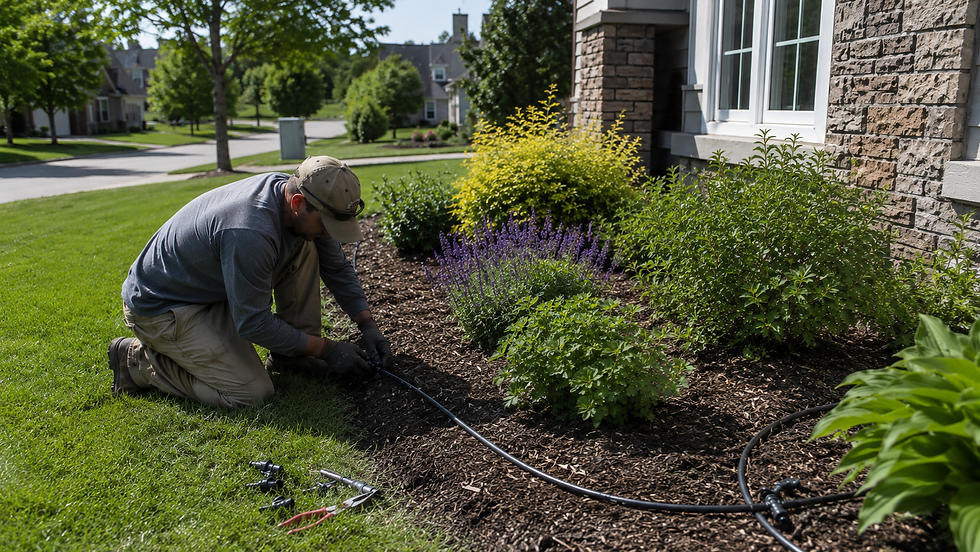
This is commonly used in mulch beds. Tubing is placed on the soil surface and hidden under mulch.
Typical cost:
$0.85–$2.85 per sq. ft.
This option is practical, affordable, and easy to adjust as plants grow.
Subsurface Drip Irrigation
Subsurface systems are installed below the soil or mulch layer and are often used for more permanent or high-end landscapes.
Typical cost:
$2.00–$5.00 per sq. ft.
This option looks cleaner and provides strong root-zone watering, but it costs more and is harder to modify later.
Drip Emitters for Trees and Shrubs
Individual emitters can be placed near root zones of shrubs, ornamental trees, and larger plantings.
This is useful for:
Arborvitae
Hydrangeas
Boxwoods
Perennials
Foundation shrubs
Newly planted trees
Why Drip Irrigation Works Well in Rochester, MN
Rochester’s climate can be tough on landscape beds. Spring may bring heavy rain, while summer can shift into hot, dry periods. Clay-heavy soils can hold water in some areas while compacted or sloped sections dry out faster.
Drip irrigation helps by delivering water slowly and consistently. University extension guidance explains that drip irrigation is effective for landscape plants, gardens, and containers because it delivers moisture efficiently near the plants rather than broadly spraying the area.
Benefits include:
Better moisture control
Less water waste
Reduced evaporation
Fewer wet leaves
Lower disease pressure
Healthier root development
Less weed growth between plants
University of Minnesota Extension notes that gardens may need supplemental watering when rainfall does not provide enough moisture, and drip systems can help deliver water more intentionally.
Rochester Climate Considerations
Clay-Heavy Soil
Many Rochester properties have clay-based soils. Clay can hold water longer, so drip irrigation should be designed carefully to avoid oversaturation.
Hot Summer Weather
July and August can stress shrubs and perennials, especially in full-sun beds. Drip irrigation helps maintain consistent moisture without overwatering the entire landscape.
Freeze-Thaw Cycles
Drip systems must be winterized properly before freezing temperatures arrive. Water left in lines can freeze and damage tubing, valves, or fittings.
Spring Rainfall
Spring rain can reduce watering needs, but newly installed plants may still require consistent moisture as they establish.
Does Drip Irrigation Require a Permit?
Basic drip systems connected to a hose bib may not require the same review as a full irrigation system, but systems connected to plumbing, backflow prevention devices, or permanent irrigation infrastructure may require permits or inspections.
Minnesota cities commonly require plumbing permits for irrigation systems and backflow prevention devices. For example, other Minnesota municipalities state that backflow prevention devices or lawn irrigation plumbing require permits and inspections.
Because requirements can vary, Rochester homeowners should confirm local rules before installing a permanent irrigation system.
Drip Irrigation vs Hand Watering
Hand watering may seem cheaper, but it is less consistent. Many homeowners either underwater or overwater because they do not have time to water each plant properly.
Drip irrigation is especially helpful for:
New landscape beds
Newly planted shrubs
Full-sun beds
Large properties
Busy homeowners
Vacation periods
Drought-prone areas
It also prevents the common problem of watering plant leaves instead of roots.
Common Homeowner Concerns
“Will drip irrigation overwater my plants?”
It can if designed or scheduled poorly. A professional system should include proper emitter spacing, flow rates, pressure regulation, and seasonal adjustment.
“Can drip irrigation be hidden?”
Yes. In mulch beds, drip tubing is usually hidden beneath mulch. In rock beds, tubing can often be placed discreetly beneath fabric or stone.
“Can drip irrigation be added to existing beds?”
Yes. Existing beds can usually be retrofitted, although labor may increase if mulch, rock, edging, or dense plantings are in the way.
“Does drip irrigation work for trees?”
Yes. Drip emitters or rings can help water young trees deeply and consistently during establishment.
“Does it need winterization?”
Yes. In Minnesota, irrigation lines should be drained or winterized before freezing temperatures.
Frequently Asked Questions
1. How much does drip irrigation cost for landscape beds in Rochester, MN?
Most systems range from $0.85–$5.00 per sq. ft., with many residential bed systems costing $300–$5,000+ depending on size and complexity.
2. Is drip irrigation worth it for mulch beds?
Yes. It helps deliver water directly to plant roots while reducing evaporation, weeds, and water waste.
3. Can drip irrigation be installed under mulch?
Yes. Drip tubing is commonly installed on soil and covered with mulch for a clean look.
4. Can drip irrigation be installed under rock beds?
Yes, but installation may be more labor-intensive, especially if existing rock must be moved.
5. Does drip irrigation need a timer?
Not always, but timers improve consistency and reduce the chance of forgetting to water.
6. Does drip irrigation require winterization in Minnesota?
Yes. Lines should be drained or winterized before freezing weather.
7. Can drip irrigation connect to a hose bib?
Yes. Smaller systems often connect to an outdoor spigot with a timer, pressure regulator, and filter.
8. Do irrigation systems need backflow protection?
Permanent systems commonly require backflow protection to help protect potable water supplies. Local requirements should be verified before installation.
9. When is the best time to install drip irrigation?
Spring, summer, and early fall are all good options, especially when installing new beds, mulch, shrubs, or trees.
Install Smarter Watering for Your Landscape Beds
Ready to make your landscape beds easier to maintain? Our Rochester landscaping team can design and install drip irrigation for shrubs, trees, perennials, mulch beds, rock beds, and new landscape renovations. Contact us today for a free estimate and a custom drip irrigation solution built for Minnesota conditions.


Comments