
How to Install Steps on Slopes Safely in Rochester, MN
Installing steps on a sloped yard can make a property safer, more functional, and more attractive. In Rochester, Minnesota, many homes are built on rolling lots, walkout basements, raised patios, terraced backyards, or properties with grade changes that make everyday access difficult. Without properly built steps, slopes can become slippery, eroded, and unsafe, especially during rain, snow, and freeze-thaw cycles.
Whether you need stone steps leading from a patio to a lower lawn, timber steps through a garden slope, or retaining wall steps for a backyard renovation, safe installation starts with proper planning, grading, drainage, and material selection.
Why You Need to Know How to Install Steps on Slopes Safely in Rochester MN
Installing steps on a slope is different from placing a walkway on flat ground. A sloped yard must manage elevation change, water runoff, soil movement, and foot traffic. If the steps are not built correctly, homeowners may deal with uneven treads, loose materials, erosion, pooling water, or dangerous winter ice buildup.
Common problems with poorly installed slope steps include:
Steps settling or shifting
Uneven riser heights
Loose stone or block movement
Water washing out the base
Ice forming on walking surfaces
Soil erosion beside the steps
Poor connection to patios, decks, or walkways
Professional installation helps ensure the steps are safe, stable, and built for Rochester’s climate.
Start With a Proper Site Evaluation
Before installing steps, the slope should be evaluated for height, grade, drainage, soil type, and access. The total rise of the slope determines how many steps are needed, while the horizontal distance determines how deep each tread can be.
A safe step design usually considers:
Total elevation change
Comfortable riser height
Tread depth
Drainage direction
Soil stability
Nearby retaining walls
Connection points at the top and bottom
Winter safety
In Rochester, clay-heavy soil and seasonal moisture can affect how well the base holds up over time. A professional landscaping company will assess whether the slope also needs grading, drainage correction, or retaining wall support.
Choose the Right Step Material
The best step material depends on the style of the home, slope severity, budget, and expected use.
Natural Stone Steps
Natural stone is one of the most attractive and durable options for sloped landscapes. Large stone slabs or limestone steps create a high-end appearance and blend well with Minnesota landscaping.
Typical cost:
$75–$250+ per step installed
$4,000–$15,000+ for many residential slope projects
Natural stone is durable, but it requires proper base preparation and careful placement to avoid shifting.
Concrete Block Steps
Segmental concrete block steps are common in retaining wall and patio projects. They offer consistent sizing, clean lines, and strong structural support.
Typical cost:
$60–$175+ per step installed
$3,500–$12,000+ for medium projects
Concrete block is a practical choice for modern landscapes and terraced yards.
Timber Steps
Landscape timber steps are often used for garden paths or more rustic areas. They are usually more affordable but may not last as long as stone or concrete.
Typical cost:
$40–$125+ per step installed
$1,500–$6,000+ for basic slope access
Timber must be properly anchored and drained to reduce rot and movement.
Paver Steps
Paver steps are often used when connecting patios, walkways, and outdoor living spaces. They provide a clean finished look and can match existing hardscapes.
Typical cost:
$50–$150+ per step installed
$3,000–$10,000+ depending on complexity
Pavers require a compacted base and proper edge restraint.
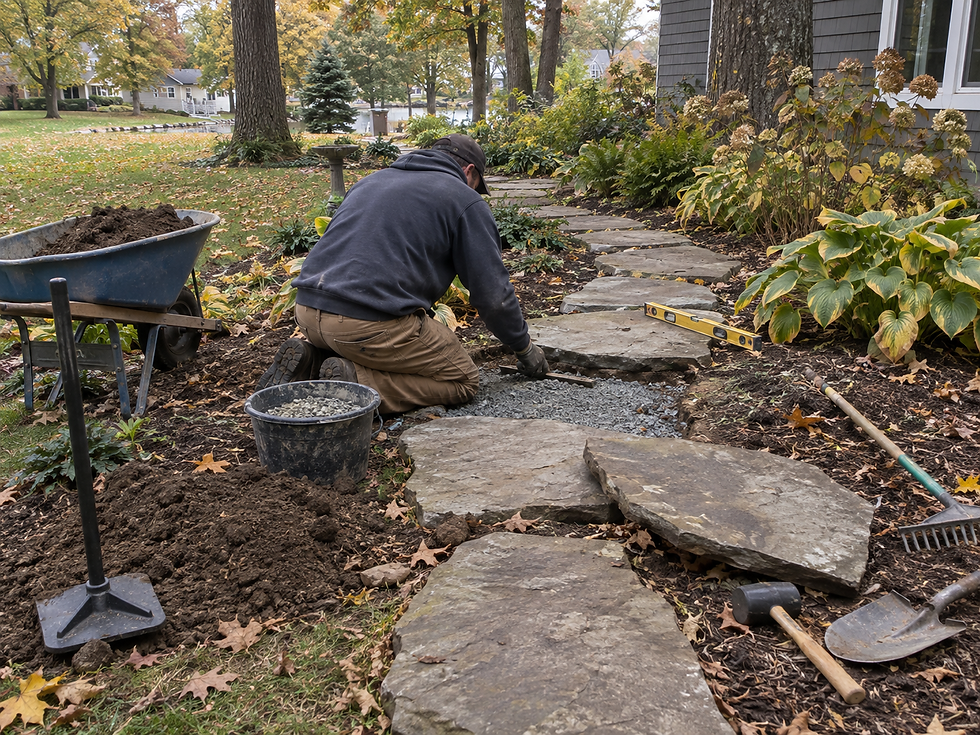
Build a Strong Base
A safe step installation depends heavily on the base. The base supports the weight of the steps, prevents settling, and helps manage water.
A proper base often includes:
Excavation
Compacted gravel
Leveling material
Drainage stone
Edge restraints
Soil stabilization
Skipping base preparation is one of the most common reasons steps fail. In Rochester, freeze-thaw cycles can move poorly supported steps over time, creating uneven walking surfaces and safety concerns.
Manage Drainage Before Installing Steps
Drainage is one of the most important parts of slope step installation. Water naturally moves downhill, and steps can interrupt that flow. If water is not managed correctly, it can wash out soil, undermine the base, and create ice hazards in winter.
Drainage solutions may include:
Grading water away from steps
Drain tile
French drains
Swales
Gravel drainage beds
Retaining wall drainage
Downspout extensions
Drainage correction in Rochester often ranges from:
$2,000–$8,000+ depending on the system
While this adds cost, it helps protect the entire investment.
Keep Step Dimensions Safe and Consistent
One of the most important safety rules is consistency. Uneven steps are a major trip hazard.
For comfortable outdoor steps, risers are often kept around 5–7 inches, with deeper treads for better footing. Larger stone steps may vary slightly, but the finished walking pattern should still feel natural and predictable.
A professional installer will calculate the slope carefully so the steps are not too steep, too shallow, or uneven from top to bottom.
Consider Handrails for Steeper Slopes
Not every landscape stairway needs a handrail, but steep slopes, long stair runs, elderly users, children, and winter conditions may make one worthwhile.
Handrails can improve safety during:
Rain
Snow
Ice
Nighttime use
Steep grade changes
Railings may add $1,000–$5,000+ depending on length, material, and design.
Rochester Climate Considerations
Outdoor steps in Rochester must be built for Minnesota weather.
Freeze-Thaw Cycles
Repeated freezing and thawing can shift soil and hardscape materials. Proper excavation, compacted base, and drainage help reduce movement.
Snow and Ice
Steps must be designed with safe footing in mind. Textured materials, proper slope, and drainage reduce winter hazards.
Spring Rain
Spring runoff can erode slopes quickly. Steps should be installed with erosion control and drainage planning.
Clay Soil
Many Rochester properties have clay-heavy soils that hold water and expand or contract seasonally. This makes base preparation even more important.
How Much Do Slope Steps Cost in Rochester, MN?
Most professionally installed landscape step projects in Rochester range from:
$1,500–$6,000 for basic timber or small stone step projects
$4,000–$15,000 for natural stone, block, or paver steps
$15,000–$30,000+ for large slope renovations with retaining walls, drainage, and lighting
Final pricing depends on:
Slope height
Number of steps
Material choice
Drainage needs
Retaining wall requirements
Equipment access
Soil conditions
Lighting or railing additions
If the slope is unstable or severely eroded, grading and retaining walls may be required before step installation.
Common Homeowner Concerns
Homeowners often ask whether steps can be added to an existing slope without rebuilding the entire yard. In many cases, yes. However, if the slope has drainage problems, erosion, or unstable soil, those issues should be corrected first.
Another concern is maintenance. Stone and concrete steps usually require less maintenance than timber. Timber steps may need replacement sooner due to moisture and soil contact.
Homeowners also worry about winter safety. Proper step layout, drainage, and surface texture help reduce slipping, but snow and ice management are still necessary.
Why Professional Installation Matters
Slope steps must be functional, safe, and structurally sound. A professional landscaping company understands how to combine grading, base preparation, drainage, and hardscape construction so the steps hold up over time.
Professional installation helps prevent:
Uneven steps
Base failure
Washouts
Poor drainage
Winter ice hazards
Premature settling
Costly repairs
For Rochester homeowners, investing in proper installation is especially important because local weather can quickly expose weak construction.
Frequently Asked Questions
1. How much does it cost to install steps on a slope in Rochester, MN?
Most projects range from $1,500–$15,000+, depending on materials, slope height, drainage, and retaining wall needs.
2. What is the safest material for outdoor slope steps?
Natural stone, concrete block, and paver steps are durable options when installed over a proper base.
3. Do slope steps need drainage?
Yes. Drainage is critical to prevent washouts, settling, and winter ice problems.
4. Can steps be installed on a steep backyard hill?
Yes, but steep slopes may require retaining walls, handrails, landings, or engineered support.
5. Are timber steps cheaper than stone steps?
Usually yes, but timber often has a shorter lifespan than stone or concrete.
6. How long does step installation take?
Small projects may take a few days, while larger slope renovations can take one to three weeks or more.
7. Do outdoor steps shift during winter?
They can if the base and drainage are not installed correctly.
8. Should I add lighting to outdoor steps?
Lighting is a smart upgrade for safety, especially on steep slopes or frequently used paths.
9. Can steps be added with a retaining wall?
Yes. Steps are commonly integrated into retaining wall and patio projects.
Build Safer Slope Access Today
Need safe, durable steps for a sloped yard in Rochester, MN? Our experienced landscaping team installs stone steps, block steps, paver steps, retaining walls, drainage solutions, and complete slope renovations designed for Minnesota conditions. Contact us today for a free estimate and professional landscape step installation.


Comments