
How to Maintain Outdoor Lighting Systems in Rochester MN
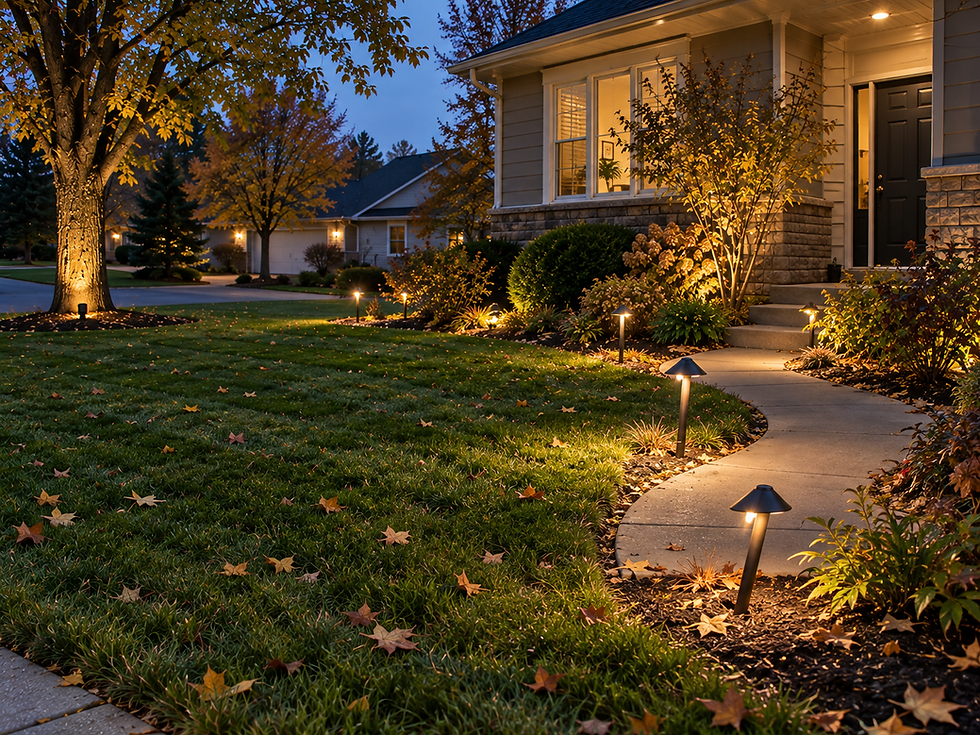
Outdoor lighting can make a Rochester property safer, easier to navigate, and more attractive after sunset. Path lights can illuminate walkways, uplights can highlight mature trees and landscaping, and properly positioned fixtures can add depth to patios, retaining walls, and other outdoor living areas.
But landscape lighting is exposed to conditions that indoor fixtures never experience. Rain, irrigation, soil moisture, mulch, lawn equipment, snow, ice, and Minnesota's seasonal ground movement can gradually affect fixtures, wiring, connections, and transformers.
Learning how to maintain outdoor lighting systems in Rochester MN can help homeowners catch minor problems before they turn into failed fixtures or larger electrical repairs.
How to Maintain Outdoor Lighting Systems in Rochester MN
A good maintenance routine starts with periodically walking the property after dark.
Turn on the complete system and look for fixtures that are dim, flickering, pointing in the wrong direction, or no longer operating. Also compare the lighting to the original landscape design. Plants grow, mulch gets added, and fixtures can shift, so a system that worked well two years ago may no longer illuminate the right areas.
At least once or twice a year, inspect:
Fixture position and stability
Lenses and covers
Exposed or damaged wiring
Electrical connections
Transformer operation
Timers and smart controls
Vegetation blocking fixtures
Water collecting around lights
Changes caused by mulch or soil
Fixtures damaged by mowing or snow removal
Annual professional servicing is a common recommendation, while properties with extensive plantings or irrigation may benefit from more frequent inspection.
Clean Landscape Lighting Fixtures
Dirt may seem like a minor problem, but outdoor fixtures naturally collect soil, pollen, grass clippings, mineral deposits, insects, and other debris.
Turn the system off before cleaning. Remove loose debris and gently clean lenses according to the fixture manufacturer's instructions.
Avoid abrasive materials that can scratch lenses or damage protective finishes.
Also inspect the fixture while cleaning it. Look for cracked lenses, deteriorated seals, corrosion, loose components, or evidence that water has entered the housing.
A fixture that repeatedly develops condensation deserves more attention than one that simply needs its lens cleaned.
Reposition Lights That Have Shifted
Landscape lights rarely stay perfectly aligned forever.
Soil movement, frost, animals, lawn maintenance, snow removal, and accidental contact can gradually tilt stake-mounted fixtures.
Even a small change in angle can make a noticeable difference. A light intended to illuminate a tree may shine into a window instead, while a path light can end up illuminating mulch rather than the walkway.
Rochester's winter conditions make this particularly worth checking each spring. After the ground thaws, walk the property after dark and evaluate the direction of every major fixture.
Do not simply force a badly shifted fixture upright while the ground is frozen. Wait until conditions allow it to be repositioned without damaging the fixture, stake, or wiring.
Keep Plants Away From Fixtures
Landscaping changes significantly during the growing season.
A small perennial in May may surround a path light by July. Shrubs can eventually block uplights, and ornamental grasses can completely hide fixtures that were originally positioned correctly.
Trim plants enough to maintain the intended lighting effect while respecting the natural form of the landscaping.
Also check whether heat-producing fixtures are too close to vegetation. Modern LED landscape lighting typically generates less heat than older technologies, but fixtures should still be installed and maintained according to manufacturer requirements.
Most residential landscape lighting is low voltage, commonly around 12 volts.
Watch for Exposed Landscape Lighting Wire
Low-voltage cable is commonly buried in landscaped areas, but soil erosion, frost movement, animals, gardening, or repeated edging can eventually expose sections.
Exposed cable is easier to damage with lawn mowers, edgers, shovels, aerators, and other equipment.
If you discover wire above the soil, don't automatically pull it tight or bury it without determining where it runs. Pulling cable can stress connections elsewhere in the system.
Pay particular attention when installing new plants, edging, irrigation, pavers, or drainage features. Knowing where lighting cable runs before digging can prevent unnecessary repairs.
Check for Moisture and Corrosion
Water is one of the biggest long-term concerns for outdoor electrical components.
Landscape lighting is designed for exterior use, but failed seals, poorly protected connections, standing water, or damaged fixtures can still cause problems.
Warning signs include:
Flickering
Intermittent operation
Corrosion
Cloudy or water-filled lenses
Multiple fixtures failing on the same run
A system repeatedly shutting off
Breakers or protection devices repeatedly tripping
Water-damage repairs can range from relatively simple connection work to replacement of damaged fixtures and components. Current 2026 cost data places typical water-damage remediation around $100 to $450 depending on severity.
Inspect the Transformer and Controls
The transformer is a critical component in a low-voltage landscape lighting system.
If an entire section—or the complete system—stops operating, the transformer, controls, connections, or electrical supply may be involved.
Check timers after seasonal time changes and verify that photocells aren't blocked by vegetation or another light source.
Smart lighting systems should also be checked after power interruptions or network changes to confirm schedules are still correct.
Avoid opening or attempting internal electrical repairs unless you are qualified to perform the work. Line-voltage problems and more complex electrical faults should be handled by an appropriate professional.
Prepare Outdoor Lighting for Rochester Winters
You generally don't need to remove a professionally installed landscape lighting system every winter.
Instead, prepare it for the conditions ahead.
Before persistent snow arrives, inspect fixture positions and make sure path lights aren't directly in areas where snow shovels, snowblowers, or plows are likely to hit them.
Mark vulnerable fixtures if necessary.
This is especially useful along driveway edges and sidewalks. Rochester's winter maintenance routinely involves snow and ice removal, making fixtures near paved areas more vulnerable to accidental impact.
Don't pile heavy snow directly onto exposed fixtures when it can reasonably be avoided.
Once spring arrives, inspect the system again for tilted fixtures, damaged stakes, exposed wiring, and other evidence of winter movement.
Check Your Lighting After Landscaping Work
One of the best times to inspect outdoor lighting is after other landscape maintenance.
Mulch installation can partially bury fixtures. Edging can damage shallow cable. Plant replacement can disturb connections. Aeration equipment can create problems where wiring isn't properly protected or routed.
Even ordinary mowing can damage a fixture positioned too close to the turf.
When completing landscaping around an existing system, identify fixture and cable locations before work begins.
After the project is finished, turn on the lighting at night and verify that everything still works correctly.
How Much Does Outdoor Lighting Maintenance Cost in Rochester MN?
Costs depend heavily on the number of fixtures and the problem being addressed.
For general budgeting, homeowners might expect:
Professional service call: $75–$150 minimum
Minor bulb or socket work: $20–$75 per fixture
Fixture replacement: $75–$250 each
Wiring repair: $120–$400
Timer or control repair: $60–$200
Transformer repair/replacement: $150–$500
Water-damage repair: $100–$450
Annual maintenance plan: roughly $100–$300
Current 2026 national pricing puts common landscape-lighting repairs between approximately $20 and $600, with an average near $250 and labor commonly around $50 to $120 per hour.
For larger systems, another current industry estimate suggests budgeting approximately $15 to $25 per fixture annually for professional maintenance.
These figures are planning ranges, not Rochester-specific quotes. System size, fixture quality, accessibility, buried-wire problems, transformer capacity, and the extent of damage can significantly change the final price.
When Is Replacement Better Than Repair?
An individual damaged fixture usually doesn't justify replacing an entire landscape lighting system.
However, replacement may make sense when an older system develops frequent wiring problems, widespread corrosion, transformer issues, or repeated fixture failures.
Current estimates put complete replacement or modernization of an aging landscape-lighting system around $1,500 to $4,000 or more depending on its size and complexity.
For new installations, low-voltage landscape lighting commonly runs approximately $100 to $300 per installed fixture, while larger outdoor lighting systems can reach several thousand dollars.
If multiple components are failing, compare the cost of repeated repairs with upgrading to a modern LED system rather than continuing to repair outdated equipment.
Frequently Asked Questions
How often should outdoor landscape lighting be maintained?
At minimum, inspect your system annually. Systems surrounded by extensive vegetation, irrigation, or frequently changing landscaping may benefit from spring and fall checks.
Can outdoor lighting stay outside during a Rochester winter?
Yes. Outdoor-rated landscape lighting is designed to remain outside. Proper installation and seasonal inspection are more important than removing the system every winter.
Why are my landscape lights leaning after winter?
Freeze-thaw movement, soft soil, snow, and accidental contact can shift stake-mounted fixtures. Reposition them after the soil becomes workable.
Why are some landscape lights dimmer than others?
Possible causes include connection problems, voltage drop, damaged wiring, fixture problems, corrosion, or transformer issues. A professional can test the system when simple cleaning doesn't solve the problem.
Should I clean outdoor lighting lenses?
Yes. Dirt, mineral deposits, plant material, and debris can reduce light output. Turn off the system and follow the manufacturer's cleaning recommendations.
What should I do if landscape-lighting wire is exposed?
Avoid damaging or pulling it. Determine why the cable became exposed and have it properly repositioned or repaired when necessary.
How much does landscape lighting repair cost?
Many common repairs fall between roughly $20 and $600, with the average repair around $250 nationally in 2026. More complicated wiring or system replacement can cost considerably more.
Can landscaping damage outdoor lighting?
Yes. Mowers, aerators, edgers, shovels, mulch installation, planting, and other landscape work can damage fixtures or buried cable.
Should outdoor lighting be checked after winter?
Yes. Spring is an excellent time to inspect fixture alignment, exposed wires, corrosion, damaged stakes, and transformer operation after Rochester's winter conditions.
Keep Your Rochester Outdoor Lighting Working Properly
Outdoor lighting should complement your landscaping without becoming another constant maintenance problem. Regular cleaning, fixture adjustments, vegetation management, wire inspections, and seasonal checks can prevent many common issues.
For Rochester homeowners, spring and fall inspections are particularly valuable because snow, frozen ground, landscaping work, and seasonal plant growth can all change how a system performs.
If your outdoor lighting is part of a larger landscaping project—or your existing landscape needs improvements around pathways, patios, retaining walls, planting beds, or other outdoor features—contact our Rochester landscaping team. Send us photos of your property and details about the areas you want to improve, and we can help determine the best next steps.


Comments