
How Much Does Landscaping Cost in Rochester MN in 2026?
How Much Does Landscaping Cost in Rochester MN in 2026? Landscaping represents one of the most significant investments Rochester homeowners make in their properties, with costs that vary dramatically based on project scope, materials, and design complexity. As we enter 2026, understanding current pricing trends and the factors that influence landscaping investment helps homeowners budget realistically and prioritize projects that deliver maximum value. In Rochester's unique southeastern Minnesota environment—with its Driftless Area topography, continental climate, and diverse architectural heritage—landscaping costs reflect both universal principles and local conditions that generic estimates cannot capture.
The difference between a modest planting bed refresh and a comprehensive outdoor living transformation spans tens of thousands of dollars. This comprehensive cost breakdown examines every component of Rochester landscaping projects in 2026, from basic maintenance to luxury installations, helping you understand what to expect and how to invest wisely in your property's outdoor spaces.
2026 Cost Trends and Economic Context
Current economic conditions significantly influence 2026 landscaping pricing in Rochester.
Material cost inflation has continued to affect the landscaping industry, with increases of fifteen to twenty-five percent over 2020-2021 levels. Lumber, while stabilizing from peak volatility, remains elevated. Stone, concrete, and metal products have seen steady increases due to transportation and energy costs. Plant material, grown over years, reflects accumulated input cost increases. These trends mean 2026 projects cost noticeably more than identical specifications from five years ago.
Labor cost increases reflect competitive market conditions for skilled landscape professionals. Experienced designers, certified horticulturists, and specialized craftspeople command premium compensation. Rochester's growing economy and low unemployment maintain upward pressure on wages. Quality landscaping firms invest in training, benefits, and retention, costs that reflect in pricing but ensure reliable service.
Equipment and technology investments improve efficiency and capabilities but add overhead. Modern landscaping operations utilize sophisticated design software, precision grading equipment, and specialized machinery that increase initial costs while improving outcomes. These investments, necessary for competitive operation, influence project pricing.
Demand patterns in Rochester's robust housing market sustain premium pricing for quality work. New construction landscaping, renovation projects, and maintenance services all compete for limited professional capacity. Homeowners seeking established, reputable firms should expect to invest accordingly.
Project Type Cost Ranges
Landscaping encompasses diverse project types with dramatically different investment levels.
Basic landscape maintenance and seasonal services represent the entry point, with costs that accumulate annually rather than requiring significant upfront investment. Weekly lawn maintenance, including mowing, edging, and cleanup, runs thirty to sixty dollars per visit for typical Rochester residential properties. Seasonal cleanups, spring and fall, cost two hundred to five hundred dollars depending on property size and tree coverage. Annual maintenance contracts, providing comprehensive care, range from two thousand to six thousand dollars per year.
Planting bed installation and renovation varies with size, material selection, and design complexity. Basic shrub and perennial planting, with modest hardscaping, costs fifteen to thirty dollars per square foot. Premium plantings with mature specimens, custom soil preparation, and irrigation integration run thirty to sixty dollars per square foot. High-design perennial gardens with specialized maintenance requirements may exceed sixty dollars per square foot.
Lawn establishment and renovation represents a significant category in Rochester, where existing turf often requires replacement or major improvement. Hydroseeding, the economical option, costs twenty to forty cents per square foot installed. Sod installation, providing immediate results, runs one dollar fifty to three dollars per square foot including preparation. Comprehensive lawn renovation with grading, drainage, soil amendment, and premium sod or seeding reaches three to five dollars per square foot.
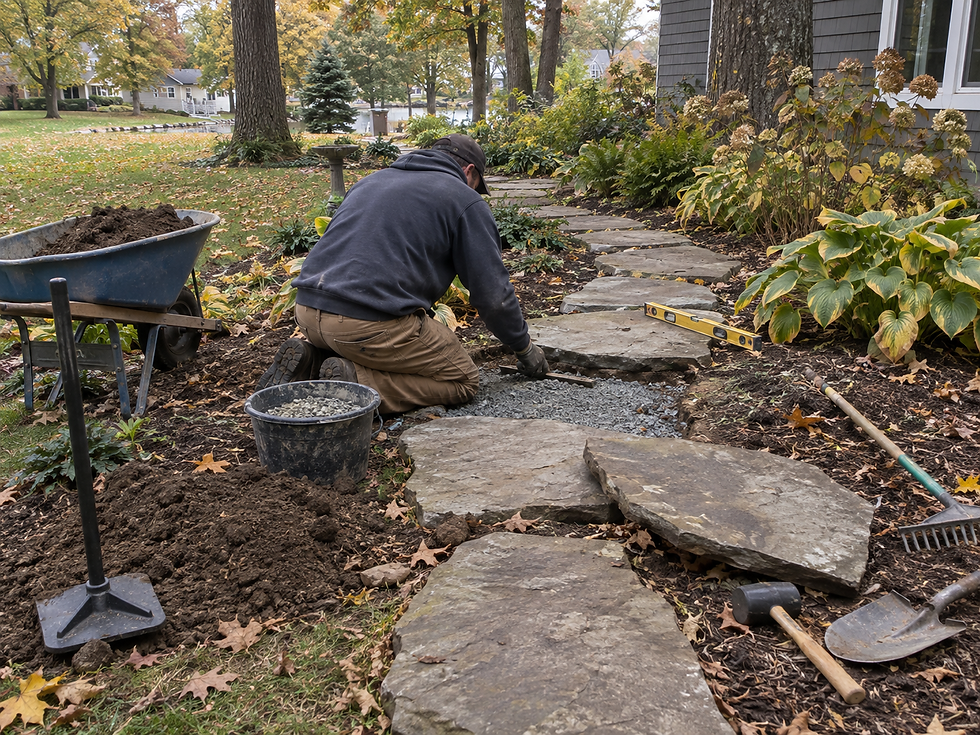
Hardscape installation—patios, walkways, retaining walls, and outdoor living structures—commands substantial investment due to material and labor intensity. Basic concrete patios cost eight to fifteen dollars per square foot. Paver installations, with base preparation and edge restraint, run fifteen to thirty dollars per square foot. Natural stone, with premium materials and specialized installation, costs twenty-five to fifty dollars per square foot. Retaining walls, highly variable by height and engineering requirements, range from twenty-five to one hundred dollars per square foot of face.
Outdoor living structures represent significant investments that transform property use. Wood decks cost twenty-five to fifty dollars per square foot depending on materials and height complexity. Pergolas and shade structures run fifteen to forty dollars per square foot. Outdoor kitchens, with appliances, utilities, and finishes, typically cost fifteen thousand to fifty thousand dollars for complete installations. Fire features range from three thousand dollars for basic units to fifteen thousand dollars or more for custom installations.
Irrigation system installation, essential for maintaining Rochester landscapes through variable summers, costs two thousand to five thousand dollars per acre for residential systems. Commercial or complex residential systems with multiple zones, smart controls, and specialized coverage may exceed these ranges.
Landscape lighting extends usable hours and enhances security, with costs from two thousand dollars for basic systems to fifteen thousand dollars or more for comprehensive architectural and landscape illumination.
Comprehensive Project Examples
Realistic 2026 scenarios illustrate total landscaping investment for typical Rochester properties.
Modest front yard refresh, two thousand square feet, with lawn renovation, foundation plantings, and basic walkway: Lawn establishment one thousand five hundred dollars, plantings three thousand dollars, walkway two thousand dollars, mulch and finishing one thousand dollars, total approximately seven thousand five hundred dollars.
Typical suburban backyard transformation, five thousand square feet, with patio, planting beds, lawn, and lighting: Patio eight thousand dollars, plantings eight thousand dollars, lawn three thousand dollars, lighting three thousand dollars, irrigation four thousand dollars, total approximately twenty-six thousand dollars.
Estate property comprehensive landscaping, twenty thousand square feet, with multiple outdoor rooms, pool surround, extensive hardscape, and mature plantings: Hardscape forty thousand dollars, plantings thirty thousand dollars, lawn eight thousand dollars, irrigation eight thousand dollars, lighting twelve thousand dollars, specialty features fifteen thousand dollars, total approximately one hundred thirteen thousand dollars.
New construction complete landscape, one acre, with grading, drainage, soil preparation, and full installation: Site work fifteen thousand dollars, hardscape twenty-five thousand dollars, plantings twenty thousand dollars, lawn ten thousand dollars, irrigation six thousand dollars, lighting eight thousand dollars, total approximately eighty-four thousand dollars.
Factors That Increase Costs
Several conditions consistently drive Rochester landscaping costs above base estimates.
Site access limitations, common in established neighborhoods with mature trees and narrow passages, require hand work and specialized equipment that increase labor costs twenty to fifty percent. Properties with steep slopes, as typical in the Driftless Area, demand terracing, retaining structures, and erosion control that add significant expense.
Soil conditions requiring intensive modification transform project economics. Rochester's clay-heavy soils, construction compaction, or former agricultural chemical legacy may demand drainage installation, deep amendment, or soil replacement that matches or exceeds visible landscaping costs.
Mature tree preservation and protection, while valuable for established character, constrain equipment access and require specialized techniques that increase costs. Tree removal, when necessary, adds expense and may trigger municipal permitting requirements.
Utility conflicts and easements complicate design and installation, requiring hand work, specialized coordination, or design modifications that increase costs and extend timelines.
Custom design and specialized craftsmanship, while delivering superior results, command premium pricing. Standardized solutions cost less; bespoke creations reflecting specific vision and site conditions justify higher investment.
Factors That Optimize Value
Strategic approaches maximize landscaping value without compromising quality.
Phased implementation spreads costs across multiple years while achieving ultimate vision. Prioritizing high-impact, high-use areas first allows enjoyment and value accumulation while deferring less critical elements.
Appropriate material selection balances initial cost with lifecycle value. Premium materials with extended durability and lower maintenance often prove economical over decades despite higher initial investment.
Professional design prevents expensive errors and ensures cohesive results. Design fees, typically ten to fifteen percent of project cost, protect larger construction investment and achieve outcomes that amateur planning cannot match.
Timing flexibility around contractor capacity may yield modest savings. Early season booking, shoulder season installation, or phasing around contractor availability can improve pricing without compromising quality.
Rochester-Specific Considerations
Local factors influence landscaping costs beyond generic estimates.
Driftless Area topography creates opportunities and challenges that flatland sites avoid. Views, slopes, and natural features may justify premium investment for dramatic results or require expensive engineering for basic functionality.
Climate demands, with intense seasonal variation, require materials and plant selections that survive temperature extremes. Cold-hardy plant material, frost-resistant hardscape construction, and irrigation systems that tolerate freezing add cost but ensure longevity.
Municipal regulations, including tree preservation, stormwater management, and zoning compliance, may require design modifications, permitting fees, and specialized installations that increase project costs.
Agricultural and woodland edge settings present deer pressure, invasive species, and wildlife management challenges that urban sites avoid. Protective measures and appropriate plant selection add cost but prevent future damage.
Investment Return and Property Value
Landscaping investment generates returns beyond immediate enjoyment.
Curb appeal and first impressions significantly influence property perception and value. Quality landscaping, particularly front yard and entry sequences, supports valuation and marketability.
Outdoor living space expansion effectively increases usable square footage at fraction of indoor construction cost. Patios, kitchens, and gathering areas provide return through extended living season and entertainment capacity.
Energy efficiency through strategic tree placement, windbreaks, and shade reduces heating and cooling costs, generating ongoing savings that partially offset initial investment.
Erosion control and drainage management prevent damage that would require expensive remediation. Proper landscaping protects foundation, prevents basement flooding, and maintains property integrity.
Frequently Asked Questions
What does basic landscaping cost in Rochester in 2026?
Maintenance services thirty to sixty dollars per visit; planting beds fifteen to sixty dollars per square foot; lawn renovation one to five dollars per square foot depending on method and scope.
How much should I budget for a complete backyard renovation?
Typical suburban backyard transformation ranges fifteen thousand to forty thousand dollars depending on size, features, and material selection.
Does 2026 inflation significantly affect landscaping costs?
Yes, fifteen to twenty-five percent increases over 2020-2021 levels reflect material, labor, and energy cost trends. Quality work commands premium pricing in robust market.
Can I landscape in phases to spread costs?
Yes, and this approach often improves outcomes by allowing learning and adjustment. Prioritize high-impact areas and defer less critical elements.
What adds most to landscaping costs?
Site challenges including access, slopes, and poor soil conditions often match or exceed visible landscaping costs. These investments protect larger project value.
Is professional design worth the cost?
Yes, typically ten to fifteen percent of project cost. Design prevents expensive errors and ensures cohesive, appropriate results that amateur planning cannot achieve.
How do I choose a landscaping contractor?
Evaluate experience with Rochester-area projects, portfolio quality, professional credentials, references, and communication compatibility. Lowest bid rarely represents best value.
What about DIY landscaping to save money?
Possible for modest projects with adequate knowledge, time, and physical capability. Complex grading, drainage, hardscape, and mature plantings typically require professional expertise.
Can landscaping increase property value?
Yes, quality landscaping typically returns seventy to one hundred percent of investment in increased property value, plus ongoing enjoyment benefits.
What maintenance costs should I expect?
Annual maintenance typically ranges two thousand to six thousand dollars for established residential landscapes, varying with size, complexity, and service level.
Ready to invest in your Rochester property's outdoor spaces with realistic understanding of 2026 costs and value? River Bluff Landscaping provides transparent, detailed proposals that account for your specific site conditions, priorities, and budget parameters. Our team understands that landscaping represents significant investment, and we deliver the expertise, quality materials, and professional execution that ensure your investment enhances property value, extends living space, and provides lasting enjoyment through Rochester's challenging seasons. We don't minimize costs to win bids; we specify appropriate scope and execute with the craftsmanship that distinguishes exceptional landscapes from disappointing shortcuts. From modest planting renovations to comprehensive outdoor living transformations, we guide you through investment decisions that balance immediate impact with long-term value. Contact River Bluff Landscaping today to schedule your consultation and discover how professional landscape design and installation transforms your property vision into beautiful, functional reality.
River Bluff Landscaping: https://riverblufflandscaping.com/


Comments