
What Season Is Cheapest for Landscaping in Rochester MN?
Landscaping costs can change throughout the year, but the cheapest season is not always as simple as choosing the coldest or least busy month. If you are wondering what season is cheapest for landscaping in Rochester MN, late summer through fall often provides some of the best overall value for certain projects. However, the lowest price depends heavily on what type of landscaping you need.
Spring is one of the busiest periods for landscapers because homeowners want yards cleaned up and projects completed early in the growing season. Summer remains active for patios, retaining walls, grading, and lawn work. Fall can offer more scheduling flexibility while still providing good conditions for planting, sod, lawn renovation, and many hardscape projects.
Winter may be the slowest season, but frozen ground limits how much outdoor construction can actually be completed.
The smartest way to save is to match your project to the season when conditions are naturally favorable instead of choosing a month based only on price.
What Season Is Cheapest for Landscaping in Rochester MN?
For many Rochester projects, late summer and fall can provide the best balance between cost, contractor availability, and favorable installation conditions.
That does not mean every contractor automatically lowers prices in September or October.
Material costs, labor rates, hauling, and equipment expenses generally do not disappear simply because demand slows. However, fall scheduling can sometimes be more flexible than the spring rush, and certain plants, lawn services, and nursery materials may be available at seasonal discounts.
Fall also works especially well for many Minnesota lawn activities. University of Minnesota Extension recommends mid-August through mid-October for aeration, early August through late September for seeding, and mid-August through late October for sod installation.
That means homeowners may be able to combine several lawn-improvement tasks efficiently during one visit.
Why Spring Can Cost More
Spring is when landscaping demand rises quickly.
Once snow melts and temperatures warm, homeowners begin requesting:
Yard cleanup
Mulch installation
Planting
Grading
Drainage work
Sod
Landscape-bed renovation
Retaining-wall repairs
Contractor schedules can fill rapidly.
Spring also brings another challenge in Rochester: wet soil.
Minnesota weather can fluctuate significantly during spring, and southern Minnesota can still experience late frosts and rapidly changing temperatures. University of Minnesota Extension notes that gardeners should rely on actual soil and air conditions rather than the calendar because temperature swings and frost risks are common.
If soil is saturated, equipment may need to wait before accessing the yard.
Those delays do not necessarily increase a contractor's base price, but they can make scheduling harder and extend the project timeline.
When Spring Is Still the Best Value
Spring can still be the smartest season for projects that benefit from a full growing season.
These include:
New shrubs
Perennials
Trees
Mulch beds
Sod
Landscape-bed renovations
Installing plants early gives them more time to develop roots before winter.
The goal should not be choosing fall simply to save a small amount if spring provides significantly better establishment conditions for the specific plant or project.
Summer Landscaping Costs
Summer is one of the easiest periods for construction-focused landscaping because the soil is usually workable and days are long.
It is a good season for:
Paver patios
Retaining walls
Rock installation
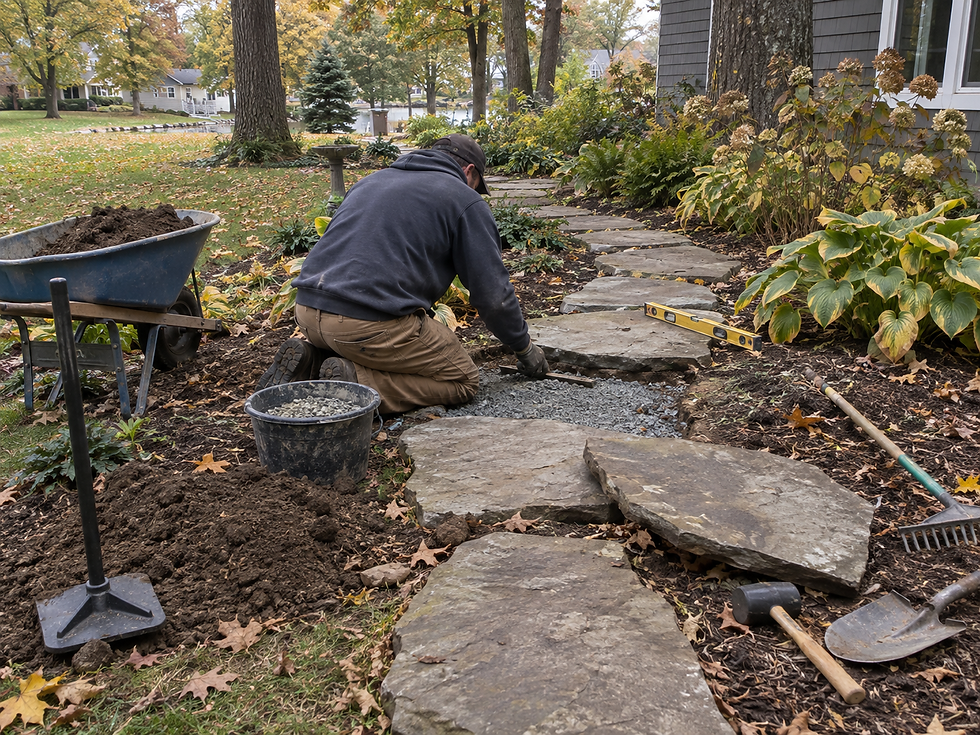
Walkways
Landscape steps
Drainage work
Grading
However, contractor schedules can remain busy.
Hot weather also increases maintenance requirements for new sod, hydroseed, shrubs, and perennials.
A project completed during July may require considerably more watering than the same project installed in September.
That additional water use may not appear on the landscaping quote, but it is still part of the homeowner's total cost.
Why Fall Can Offer the Best Value
Fall has several advantages.
Temperatures are cooler, evaporation slows, and many cool-season grasses become more active again.
University of Minnesota Extension explains that cool-season turf grows strongly in fall, with optimal shoot growth occurring when air temperatures are approximately 55–75°F. Root growth is strongest when soil temperatures are around 50–65°F.
That makes late summer and early fall especially attractive for:
Sod
Hydroseeding
Overseeding
Aeration
Lawn renovation
Planting
Landscape cleanup
Fall may also offer more contractor scheduling flexibility once the major spring and early-summer rush has passed.
For many homeowners, that combination can produce better value even if the contractor's hourly labor rate is unchanged.
Can Plants Be Cheaper in Fall?
Sometimes.
Nurseries may discount remaining trees, shrubs, and perennials toward the end of the growing season.
This can reduce material costs.
However, homeowners should not choose unhealthy, poorly suited, or excessively root-bound plants simply because they are discounted.
A $30 savings is not worthwhile if the plant struggles or dies after installation.
Cold hardiness, sunlight, drainage, mature size, and soil conditions remain more important than the sale price.
Is Winter the Cheapest Time?
Winter can be a good time for planning, but not necessarily installation.
Frozen soil makes many outdoor projects difficult or impossible.
Excavation, grading, planting, and lawn installation are generally limited once the ground freezes.
Winter can still be useful for:
Landscape design
Estimating
Planning spring projects
Choosing materials
Developing phased renovation plans
Planning during winter can also help homeowners secure a preferred spring installation window before schedules fill.
But waiting for January simply because contractors may be less busy will not necessarily make a retaining wall or patio cheaper to build.
Rochester's Short Construction Season Matters
Rochester's climate creates a relatively short outdoor landscaping season compared with warmer regions.
A current Rochester cost guide specifically identifies the area's short season as a local pricing factor. It estimates landscape labor around $46–$70 per hour, front-yard projects around $1,650–$5,500, and larger backyard projects around $5,500–$27,500.
Because contractors have fewer months to complete outdoor work, demand becomes concentrated between spring and fall.
This is one reason waiting for an extreme off-season discount may not produce the savings homeowners expect.
How Much Does Landscaping Cost in Rochester MN?
Current 2026 Rochester estimates provide useful planning ranges:
Basic lawn and garden cleanup: $165–$440 per visit
Front-yard landscaping: $1,650–$5,500
Backyard landscaping: $5,500–$27,500
New lawn preparation: $1–$3 per square foot
Mulch installation: $83–$165 per cubic yard installed
Tree planting labor: $165–$550 per tree
Retaining wall installation: $28–$83 per linear foot
Sprinkler system installation: $2,750–$6,600
These Rochester-specific 2026 ranges vary with access, material selection, project complexity, disposal, and equipment requirements.
Another current Rochester estimate places broad landscaping work at approximately $2–$13 per square foot, with a typical midpoint near $5 per square foot.
How to Save Without Choosing the Wrong Season
Timing helps, but project planning often saves more money than waiting for a specific month.
Homeowners can reduce unnecessary costs by:
Combining related work into one project
Choosing locally available materials
Reusing healthy existing plants
Reusing landscape rock when appropriate
Avoiding unnecessary demolition
Completing drainage and grading before finish work
Scheduling before peak demand
Planning projects in phases
For example, if grading, mulch beds, and sod all need work, completing them as one coordinated project can reduce repeated mobilization and site disturbance.
Complete Foundational Work First
Trying to save money by skipping grading or drainage can become expensive later.
If water flows toward the home or collects in low areas, fix that before installing:
Sod
Mulch
Plants
Pavers
Otherwise, finished landscaping may need to be removed later to correct the underlying problem.
The least expensive project is not always the quote with the smallest initial number.
Fall Is Especially Good for Lawn Projects
For Rochester homeowners focused primarily on lawn improvement, fall deserves serious consideration.
University of Minnesota Extension identifies late summer through fall as the preferred period for many cool-season lawn tasks, including seeding, aeration, fertilization, and sod installation.
That means one coordinated fall project might include:
Finish grading
Lawn repair
Hydroseeding or sod
Aeration
Weed control
This timing takes advantage of the natural growth cycle instead of trying to force new turf through extreme summer heat.
Don't Wait Too Long Into Fall
Fall has advantages, but there is still a deadline.
Once the ground begins freezing, installation options become limited.
Planting late also gives roots less time to establish.
Some hardscape work can continue farther into fall than planting, but excavation becomes increasingly difficult once temperatures remain below freezing.
Scheduling in September or early October generally provides more flexibility than waiting until late November.
Which Season Is Best for Different Landscaping Projects?
For Rochester homeowners, a practical seasonal strategy is:
Spring: planting, mulch, cleanup, sod, and bed renovation.
Summer: patios, retaining walls, grading, rock, drainage, and other construction-heavy projects.
Late Summer and Fall: sod, hydroseed, lawn renovation, planting, cleanup, and many hardscape projects.
Winter: design, budgeting, estimating, and scheduling future work.
This approach usually produces better results than choosing the same season for every project.
Frequently Asked Questions
What is the cheapest season for landscaping in Rochester MN?
Late summer and fall can provide good overall value because demand may become more flexible and many plants and lawn projects perform well during cooler weather.
Do landscapers charge less in fall?
Not necessarily. Labor and equipment costs often remain similar, although contractor availability or seasonal material discounts may improve.
Is landscaping cheaper in winter?
Outdoor construction is limited by frozen ground. Winter is often better for planning and design than physical installation.
Is spring the most expensive season?
Spring can be one of the busiest seasons, which may reduce scheduling flexibility. However, pricing still depends primarily on project scope and materials.
Are plants cheaper in fall?
Some nurseries discount remaining inventory, although availability becomes more limited.
Is fall a good time for sod in Rochester?
Yes. University of Minnesota Extension lists mid-August through late October as a recommended period for sodding.
When is the best time for lawn renovation?
Late summer through early fall is particularly favorable for cool-season turf. Seeding is recommended primarily from early August through late September.
Can retaining walls and patios be installed in fall?
Yes, as long as soil and weather conditions remain suitable for excavation and proper base construction.
Contact a Rochester Landscaping Company
So, what season is cheapest for landscaping in Rochester MN? For many projects, late summer and fall can offer the best overall value, but there is no universal discount season.
Spring works well for establishing new landscapes but is often busy. Summer is ideal for construction projects but can increase watering requirements. Fall offers excellent conditions for lawn work, many planting projects, and outdoor construction while sometimes providing more scheduling flexibility. Winter is best used for planning before the next installation season.
If you're considering grading, mulch or rock installation, planting, retaining walls, paver work, sod, hydroseeding, drainage improvements, or a complete landscape renovation in Rochester, contact our team today. We can recommend the most practical installation season for your project and provide a personalized estimate based on your property's needs.


Comments