
When Is the Best Time to Start a Landscaping Project in Rochester MN? 2026 Seasonal Guide
Starting a landscaping project in Rochester, Minnesota requires careful timing. With harsh Zone 4 winters and a short growing season, the best time to start a landscaping project can make the difference between a thriving outdoor space and a wasted investment. This guide breaks down the optimal timing for every type of landscaping project in Rochester.
Spring: The Prime Season (April-June)
Best For: Hardscaping, soil preparation, tree planting, sod installation
Spring dominates Rochester's landscaping calendar for good reason. As ground thaws and frost leaves the soil, conditions become ideal for foundational work.
April (Ground Thaw Period):
Soil preparation and grading
Retaining wall construction
Patio and walkway base installation
Drainage solutions
Early tree and shrub planting (after frost leaves ground)
May (Optimal Planting Window):
Sod installation (after May 10-15 last frost date)
Perennial and annual planting
Shrub installation
Irrigation system installation
Landscape lighting
June (Finishing Work):
Final plantings
Mulch application
Water feature installation
Outdoor kitchen construction
Spring Advantages: Maximum growing season ahead for plant establishment, optimal soil moisture, contractor availability (book 6-8 weeks ahead).
Spring Challenges: Higher demand increases costs 10-15%, weather delays possible, rushed decisions common.
Summer: The Growth Season (July-August)
Best For: Container gardens, minor additions, maintenance, outdoor living features
While not ideal for major installations, summer offers unique opportunities.
Early Summer (July):
Container garden installations
Annual color rotations
Water feature additions
Outdoor kitchen completion
Fire pit installation
Late Summer (August):
Overseeding and lawn repair
Dividing perennials
Fall preparation planning
Early bulb planting
Summer Advantages: Warm soil promotes quick establishment, clear weather windows, immediate enjoyment of outdoor spaces.
Summer Challenges: Heat stress on new plants, higher water requirements, limited contractor availability for large projects.
Fall: The Value Season (September-October)
Best For: Tree planting, hardscaping, budget projects, spring preparation
Fall represents Rochester's hidden gem for landscaping, offering significant advantages.
September (Optimal Tree Planting):
Deciduous tree installation (root growth continues until ground freezes)
Shrub planting
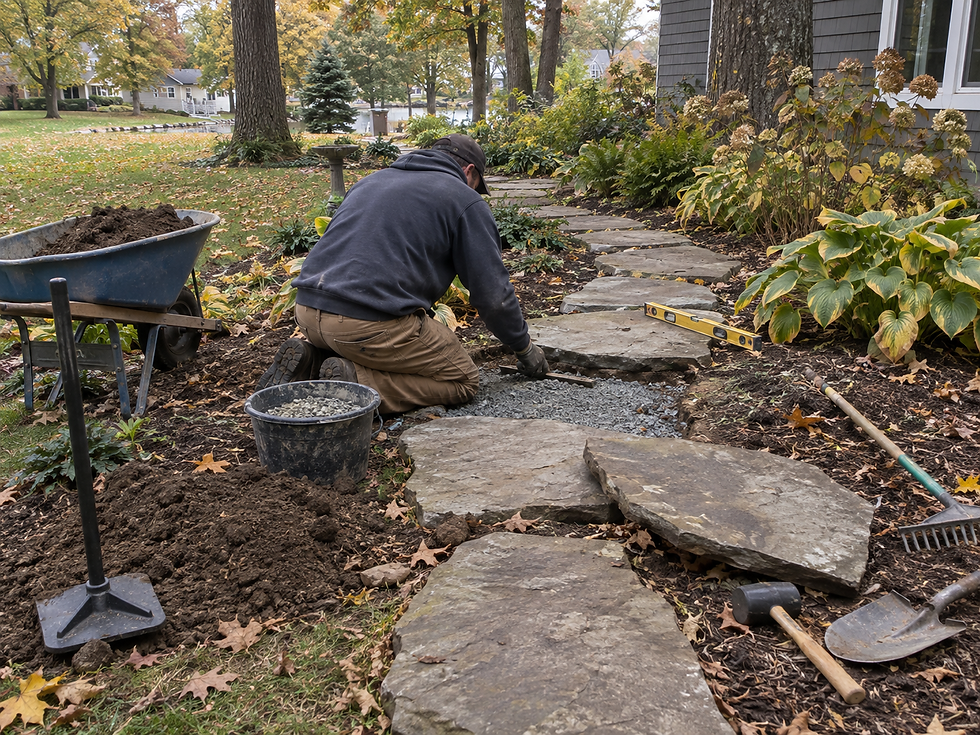
Hardscaping projects
Patio and walkway completion
Retaining walls
October (Winter Prep):
Spring bulb installation
Perennial division
Mulch application
Irrigation winterization
Final grading
Fall Advantages: 10-20% cost savings, cooler weather reduces plant stress, ideal root establishment conditions for trees, contractor availability improves.
Fall Challenges: Shorter daylight hours, potential early frost, limited plant selection, rushed timeline before freeze.
Winter: The Planning Season (November-March)
Best For: Design, budgeting, booking, permits, indoor consultations
Rochester's harsh winters make outdoor work impossible, but smart homeowners use this time strategically.
November-February:
Landscape design and planning
Contractor selection and booking
Permit applications
Budget finalization
Material selection
Late Winter (February-March):
Early contractor booking for spring
Soil testing
Final design approvals
Pre-season consultations
Winter Advantages: Best pricing for spring work, unlimited design time, no weather pressure, priority scheduling.
Winter Limitations: No outdoor installation possible, delayed gratification, weather uncertainty for spring start dates.
Rochester-Specific Timing Considerations
Frost Dates:
Average last frost: May 10-15
Average first frost: October 1-5
Growing season: Approximately 140 days
Soil Conditions:
Clay soil requires 2-3 weeks after thaw for workable conditions
Spring saturation delays heavy equipment access
Fall soil warmth persists 4-6 weeks after air temperatures drop
Weather Patterns:
June thunderstorms can delay projects
August drought stress affects new plantings
October snow possible, compressing fall schedule
Project-Specific Timing Recommendations
Patios and Hardscaping: April-May or September-October (avoid freeze-thaw cycles during curing)
Tree and Shrub Planting: April-May or September (root establishment before stress)
Sod Installation: May 15-June 15 (optimal temperatures, adequate moisture)
Perennial Gardens: April-June or September (establishment period before extremes)
Water Features: April-June (full season enjoyment, easier excavation)
Outdoor Lighting: April-May or September-October (comfortable working conditions)
2026 Rochester Landscaping Calendar
January-February: Design and planning phase March: Book contractors, finalize plans, permits April: Begin hardscaping, soil preparation May: Planting season begins after frost June: Peak installation, finishing work July-August: Maintenance, additions, enjoyment September: Fall planting, hardscaping October: Winter preparation, final projects November-December: Planning for 2027
Maximizing Your Timing Strategy
Book Early: Quality Rochester landscapers fill 60-70% of spring slots by February.
Be Flexible: Build 2-3 week weather buffers into your timeline.
Phase Large Projects: Spread extensive work across spring and fall for budget and scheduling ease.
Consider Fall: The savings and growing conditions often outweigh the shorter enjoyment period.
Plan for Winter: Use the off-season to avoid spring rush decisions and secure better pricing.
FAQs
When is the absolute best time to start landscaping in Rochester? Mid-April through May offers optimal conditions for most projects, balancing workable soil, mild temperatures, and full growing season ahead.
Can I landscape in summer in Rochester? Yes, but focus on container gardens, additions to existing landscapes, and features like fire pits or lighting rather than major plantings.
Is fall too late for landscaping in Rochester? No, September is ideal for trees and hardscaping. October works for preparation and winterization. You'll save 10-20% compared to spring.
How early should I book a Rochester landscaper for spring 2026? By February 1, 2026, to secure preferred dates and early-season pricing.
What happens if I miss the spring window? Fall offers excellent conditions for many projects, or you can plan for the following spring with winter design work.
Does Rochester's clay soil affect timing? Yes, clay stays saturated 2-3 weeks longer than sandy soils. Wait for soil to crumble rather than smudge when squeezed.
Can hardscaping projects continue into fall? Yes, but complete concrete and mortar work by October 1 to ensure proper curing before freeze.
When should I plant trees in Rochester for best survival? April-May or September. Avoid summer heat stress and winter frozen ground.
How does Zone 4 climate affect landscaping timing? The short growing season (140 days) makes spring and fall timing critical. Winter damage risk requires hardier plants and proper timing.
What landscaping can I do myself in winter? Design planning, contractor research, material selection, and tool maintenance. Save outdoor work for appropriate seasons.
Ready to plan your 2026 Rochester landscaping project? Contact River Bluff Landscaping for a free consultation. We'll help you choose the perfect timing for your specific project, ensuring maximum value and long-term success in Minnesota's challenging climate. Call now to secure your preferred season!


Comments